
Oral Health Guide
Heart Health
Starts in
Your Mouth
The science behind why your dentist cares about your heart and why your cardiologist should care about your teeth.
 The Mouth–Heart Inflammation Loop
- How Bacteria Travel From Gums to Arteries
- 4 Cardiovascular Conditions Linked to Gum Disease
- Daily Habits That Protect Both

Sources: American Heart Association; Journal of Periodontology
Your Mouth Is the Body's Early Warning System
Most people think of oral health as separate from "real" health, something a dentist manages in a silo while a doctor handles everything else. The science disagrees.
Your mouth is one of the most exposed environments in your body. It's where external bacteria, food, and environmental compounds first encounter your immune system. When chronic inflammation takes hold in the gums, it doesn't stay there. The same inflammatory proteins and bacteria that damage gum tissue enter the bloodstream and trigger immune responses throughout the entire body.
Bleeding gums, persistent bad breath, and gum recession aren't just dental problems. They are frequently the first visible signs that systemic inflammation is already underway. Many patients discover serious conditions like diabetes, autoimmune disorders, and cardiovascular disease because a dentist noticed something first.
Heart disease is the most studied and well-documented example of this connection, but it is far from the only one. What your mouth is doing right now is a window into what the rest of your body may be preparing to deal with.
How the Inflammation Loop Works
The path from gum disease to heart disease isn't coincidence. It's a predictable three-stage biological process. And it almost always begins with what you eat.

Processed Food Fuels the Fire
Refined sugars and fermentable carbohydrates found in processed foods directly feed harmful oral bacteria. These bacteria produce acid, die, and release endotoxins, the starting point of the cascade.

Bacteria Breach the Barrier
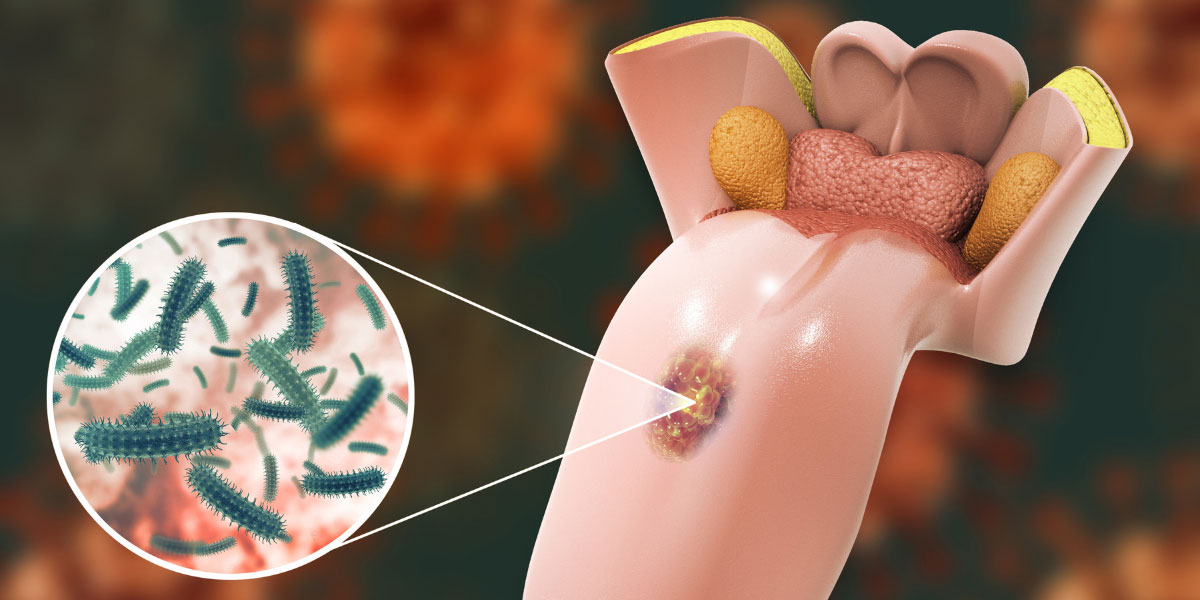
Chronic gum inflammation weakens gum tissue, creating entry points for bacteria and inflammatory compounds to enter the bloodstream, a process called bacteremia that can happen even during routine chewing.

Arteries Inflame Over Time
Once in the bloodstream, oral bacteria trigger systemic C-reactive protein (CRP) spikes and immune responses that damage artery walls, promote plaque buildup (atherosclerosis), and raise cardiovascular risk.
The honest truth
If the standard diet consisted of whole, unprocessed foods (as humans ate for most of our evolutionary history), the bacterial overgrowth driving this entire inflammation loop largely wouldn't exist. The need for aggressive preventive dental care, the supplements, the specialized rinses and products: these exist primarily because the modern processed-food diet creates the microbial conditions that make them necessary. That isn't a judgement. It's the mechanism. And it's worth knowing.
4 Cardiovascular Conditions Linked to Oral Inflammation
Gum disease doesn't raise the risk of just one cardiovascular condition. It shows up across the spectrum. Here are the four most established connections in the research.
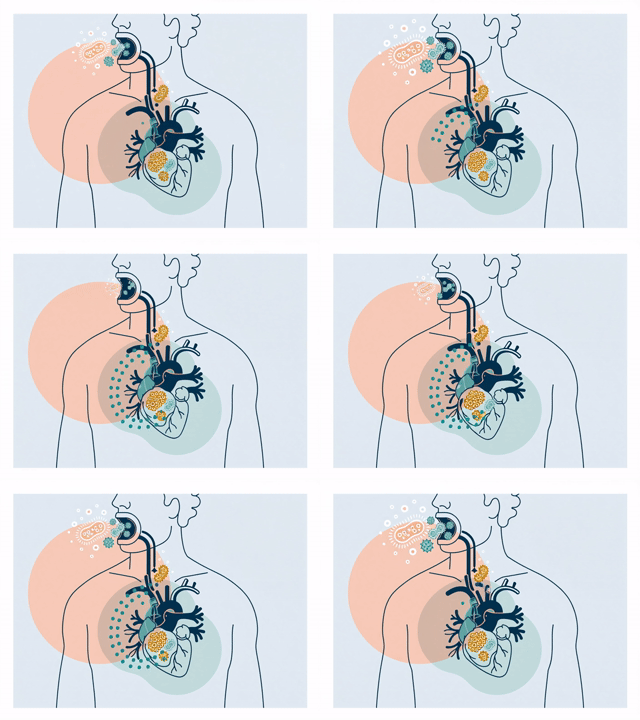
Atherosclerosis
Oral bacteria found in arterial plaque deposits trigger immune responses that accelerate artery wall thickening, the same process behind coronary artery disease and heart attacks.
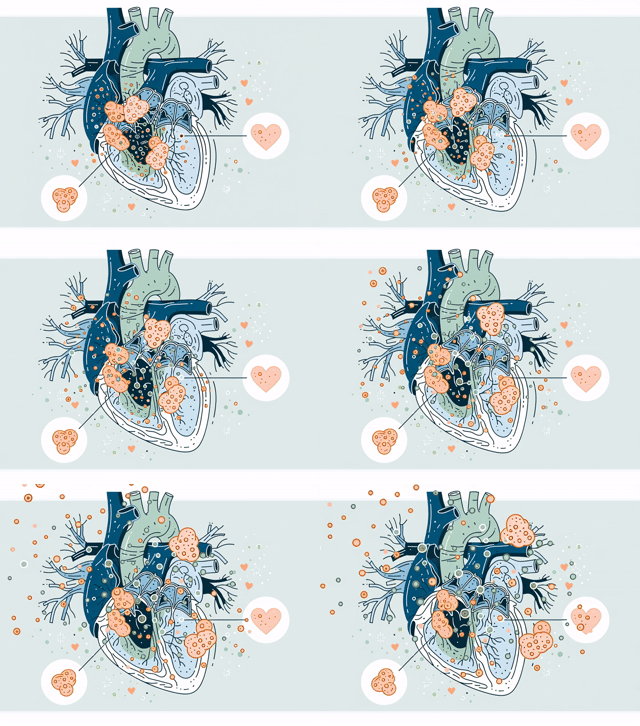
Bacterial Endocarditis
Oral bacteria, particularly Streptococcus species, can attach to heart valves and cause a potentially life-threatening infection. People with existing valve abnormalities face the highest risk.

Stroke
Periodontal bacteria can trigger clot formation and contribute to emboli that block cerebral blood vessels. Research shows a 2× higher stroke risk in individuals with untreated gum disease.

Hypertension
Systemic inflammatory markers elevated by gum disease contribute to arterial stiffness and vascular resistance. Research links severe periodontitis with measurably higher resting blood pressure.
The Inflammation Marker: CRP by Gum Health Status
C-Reactive Protein (CRP) is a blood marker for systemic inflammation. Values above 3 mg/L are classified as high cardiovascular risk by the American Heart Association. Gum disease drives it up predictably and progressively.
CRP values are representative of published research ranges. Individual results vary. Values above 3 mg/L are classified as high cardiovascular risk (AHA). Sources: NIH/PubMed periodontal-CRP meta-analyses.
Evidence-based guidance
5 Habits That Protect
Your Mouth and Your Heart
You can interrupt the inflammation loop at multiple points. These five habits carry the strongest evidence base for reducing both gum disease burden and its associated cardiovascular risk.
Where the highest-risk bacteria actually live
Interdental spaces (the areas between teeth that no toothbrush reaches) harbor the most anaerobic bacteria implicated in both periodontal disease and cardiovascular inflammation. These bacteria thrive without oxygen, multiply rapidly, and produce the endotoxins that drive the gum-to-bloodstream pathway.
Daily flossing disrupts the biofilm before it calcifies into tartar. Once calcified, no brush, floss, or rinse can remove it. Only professional scaling can. The window for effective daily prevention is short: biofilm matures into a pathogenic state in as little as 24–36 hours.
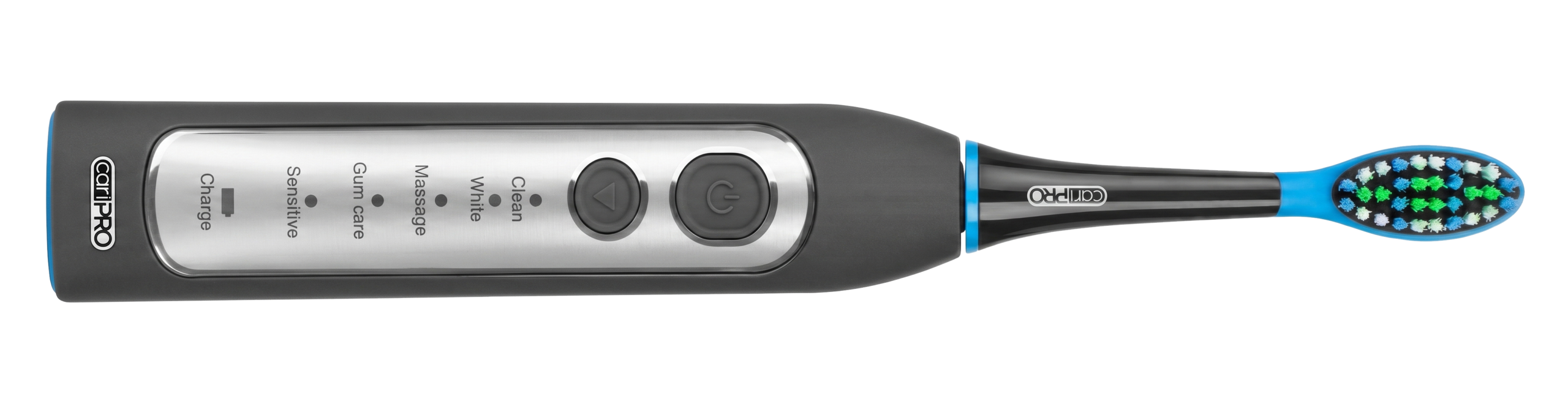
The average person brushes for 45 seconds
Studies consistently show adults average 45–70 seconds of brushing per session. At that speed, large portions of the mouth, particularly the gumline along the back teeth, are left with biofilm intact. Over time, those neglected zones become origin points for chronic, low-level inflammation.
An electric toothbrush with a built-in two-minute timer removes measurably more plaque at the gumline than a manual brush in the same time, specifically the zone where the bacterial-to-bloodstream transfer begins. The gap between what most people actually do and what the research recommends is significant, and the fix is simple.
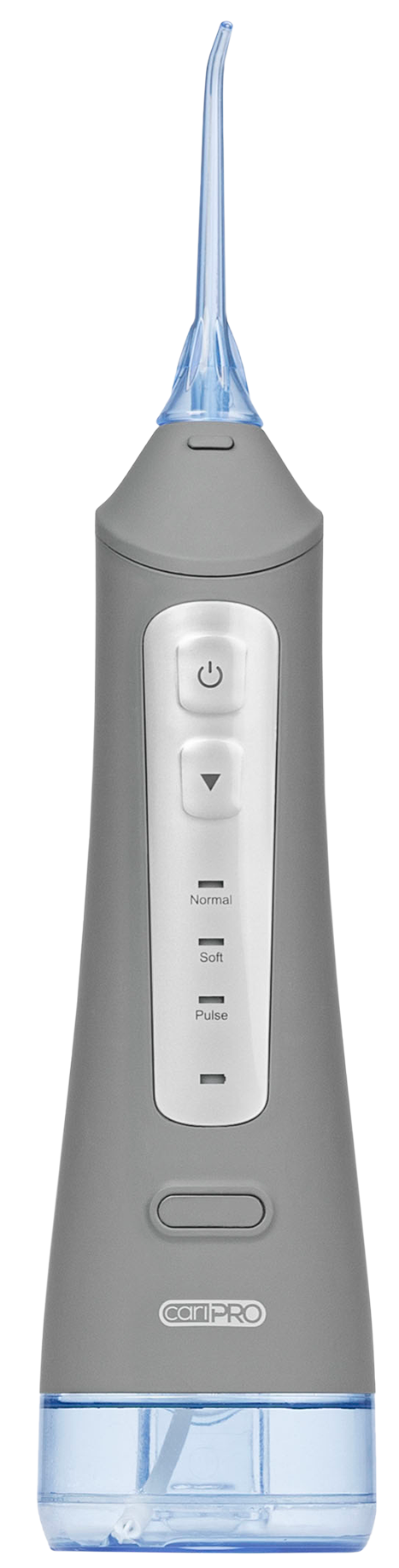
Removes what brushing can never touch
Once biofilm calcifies into tartar (calculus), it can only be removed with professional scaling tools. No brush, floss, or rinse affects it. Tartar deposits are chronically inflamed tissue, a constant low-level infection that keeps CRP elevated even in people who are otherwise disciplined about their oral care.
Every six-month cleaning removes this baseline inflammatory load. But equally important: cleanings give your dentist the opportunity to spot early-stage changes in tissue, bone level, and oral mucosa that can signal systemic conditions like diabetes, autoimmune disease, and nutritional deficiencies before they're diagnosed anywhere else in the body.
Your first line of biological defense
Saliva isn't passive. It's an active antimicrobial system containing immunoglobulins, enzymes, and buffering agents that continuously suppress harmful bacterial populations and neutralize acid. When saliva flow drops due to medications, dehydration, mouth breathing, or aging, oral bacteria multiply rapidly and unchecked inflammation follows.
If you take medications known to cause dry mouth (antihistamines, antidepressants, blood pressure medications, diuretics), managing saliva flow is not optional. Stay hydrated, consider xylitol-based oral rinses, and ensure your dentist knows your full medication list so they can monitor the downstream effects accordingly.

They may catch what your GP hasn't yet
Your dentist examines your oral tissue up close twice a year. Oral manifestations of systemic disease appear early. Changes in gum texture, unusual lesions, bone loss patterns, tooth sensitivity shifts, and breath chemistry can all signal conditions developing elsewhere in the body long before they appear in standard bloodwork.
Give your dentist your complete medication list, medical history, and any recent diagnoses. If you have heart disease, diabetes, or an autoimmune condition, your dentist needs to know, both to adjust treatment and to watch for oral signs of progression. The relationship should be bidirectional: your dentist and your doctor sharing information about the same patient.
Your Mouth Is Telling You Something
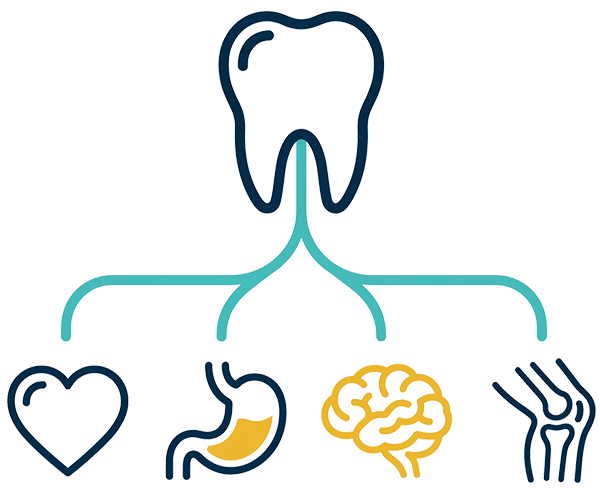
Heart disease gets the most research attention in the oral-systemic literature, but it's one entry point into a much larger picture. The same inflammatory mechanism that connects gum disease to cardiovascular risk also appears across a spectrum of serious conditions:
In nearly every case, gum disease didn't cause these conditions outright, but chronic oral inflammation appears to accelerate, worsen, or serve as an early indicator of them. The mouth isn't a separate system. It's a diagnostic window into the whole body.
The uncomfortable truth underlying all of this: if humans ate a diet of whole, unprocessed foods, as most of us did for most of our evolutionary history, the bacterial overgrowth driving this inflammation largely wouldn't exist at the scale it does today. The modern dental hygiene industry, and the systemic disease burden associated with poor oral health, are substantially downstream consequences of a processed-food diet. That doesn't mean brushing doesn't matter. It means knowing what's upstream does.
In the meantime, the gap between the diet most people eat and the oral environment the body needs can be meaningfully narrowed. Consistent mechanical removal of biofilm, professional care every six months, and the right tools at home don't solve the root cause, but they reduce the damage while you live in the world as it actually is. The cariPRO electric toothbrush is specifically designed to clear biofilm at the gumline, the exact zone where the oral-heart inflammation loop begins.