

Why Night
Guards Turn
Yellow
What causes discoloration, how to clean it, and when to replace
 Why Guards Yellow Over Time
- 4 Key Causes of Discoloration
- 3 Cleaning Methods That Work
- Reorder from $41 in 3–7 Days

Mild yellowing is mostly cosmetic — but heavy discoloration signals significant bacterial buildup that can impact oral health if left untreated.
Why Do Night Guards Turn Yellow?
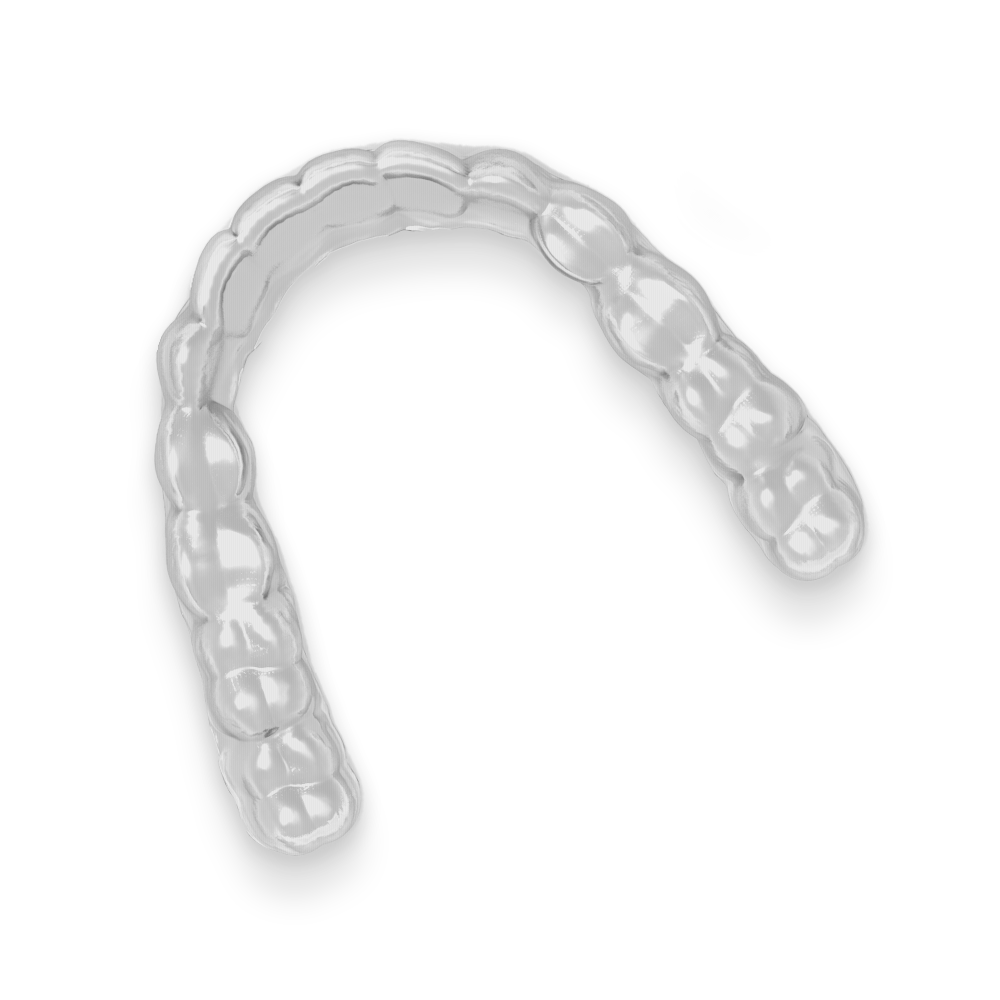
Night guards (occlusal splints or bruxism guards) commonly develop a yellow tint after months of use. This happens mainly from bacteria, plaque, and biofilm buildup caused by saliva, oral proteins, and minerals interacting with the guard's surface over time.
The discoloration is a combination of organic staining from what enters your mouth and structural degradation of the guard material itself. Understanding the root causes helps you choose the right cleaning routine — and know when it's time to replace your guard entirely.
4 Key Causes of Yellowing
Several factors work together to stain and degrade your night guard. Each one accelerates discoloration differently — and most are avoidable with the right habits.
The four most common culprits behind night guard yellowing:
Food & Drink Residues:
Staining particles from coffee, tea, and red wine linger on the guard's surface if you don't rinse your mouth before inserting it each night.
Saliva Minerals & Calcium Deposits:
Minerals naturally present in saliva — including calcium — form cloudy or yellow buildup on the guard's surface over time, similar to tartar on teeth.
Material Wear & Degradation:
Scratches, bite marks, and surface degradation make the guard more porous, trapping bacteria and stains. Softer or lower-quality materials discolor faster than hard acrylic or premium alternatives.
Poor Cleaning Habits:
Inadequate rinsing, infrequent deep cleaning, or storing your guard while still moist promotes bacterial growth and accelerates staining over time.
Effective Methods to Combat Yellowing
Regular maintenance slows or reverses yellowing and keeps your guard hygienic. Here are the proven options — ranked from most effective to supportive daily habits.
Uses high-frequency ultrasonic waves (~40,000–50,000 kHz) and microscopic bubbles to remove debris, plaque, and stains from every surface — without abrasives that could scratch or degrade your guard.
How to use:
Fill the basin with water (optionally add half a cariPRO cleaning tablet), submerge your guard, and run a 5-minute cycle. The built-in UV light kills up to 99.9% of bacteria and viruses simultaneously.
Gentle enough for daily or weekly use. Safe for all night guard materials including soft, hard, and dual-laminate guards.
Shop Ultrasonic Cleaner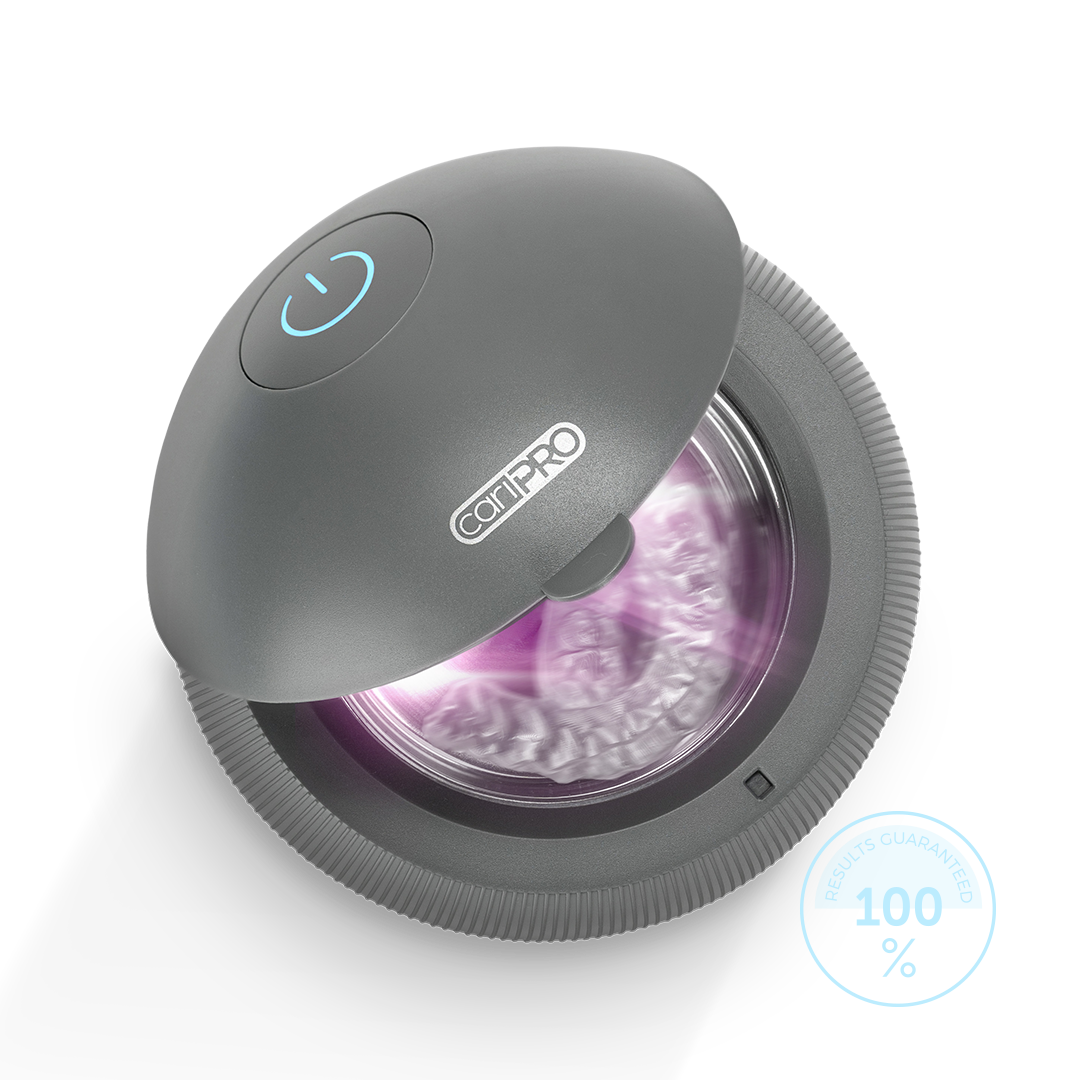
Effervescent tablets formulated specifically for night guards and retainers. The fizzing action penetrates surface scratches and crevices where bacteria hide — reaching spots that brushing alone misses.
How to use:
Dissolve one tablet (or half for lighter cleaning) in warm water. Soak your guard for 3–10 minutes, brush gently, and rinse thoroughly. Use weekly for deeper cleaning between daily rinses.
Lifts stains, kills bacteria, neutralizes odors, and leaves a fresh minty feel after each use.
Shop Cleaning Tablets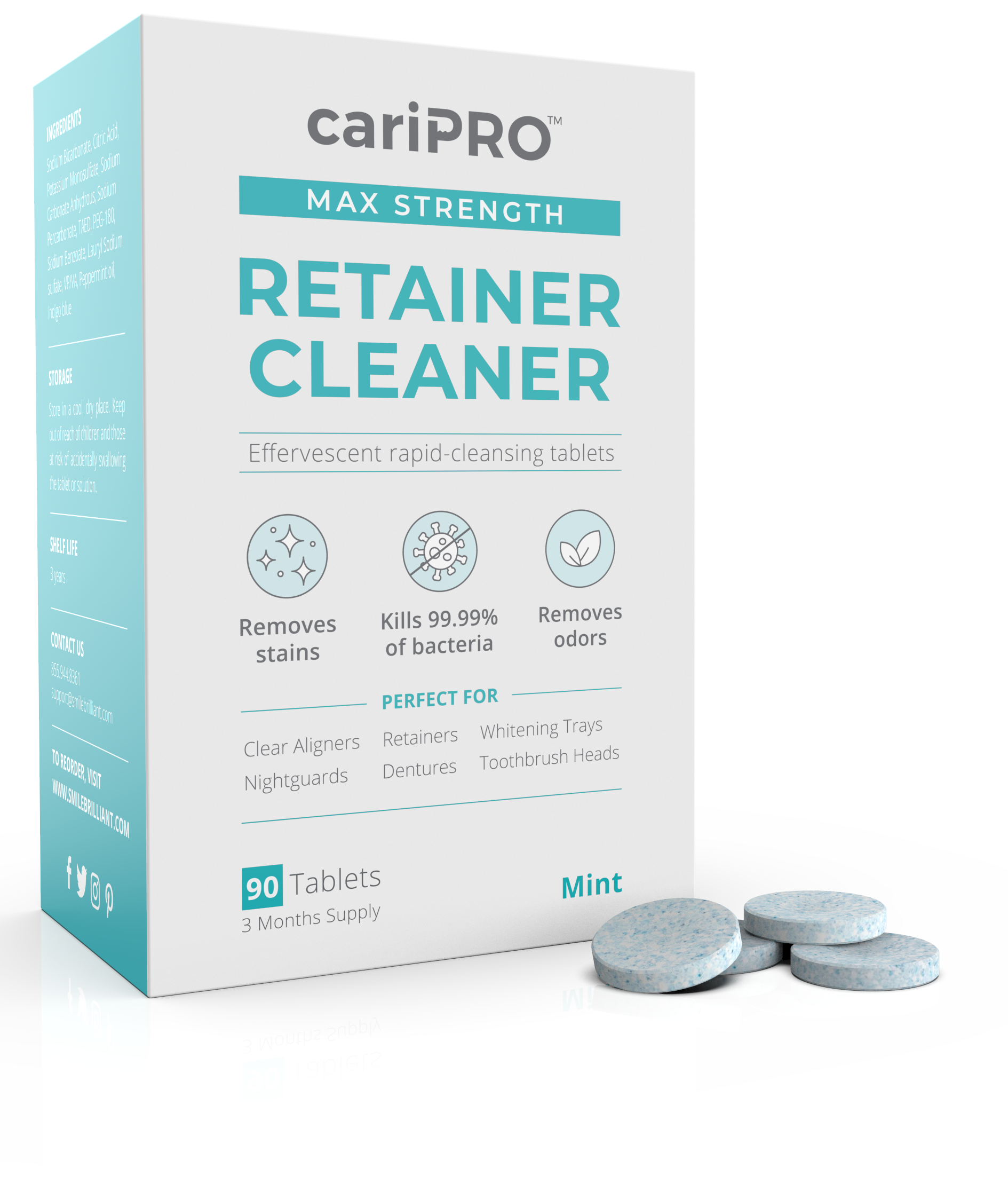
Soak your guard in 3% hydrogen peroxide for 30 minutes to disinfect and brighten surface stains. For more stubborn mineral buildup, use a two-step approach:
Two-step method for mineral deposits:
Step 1 — Pre-soak in equal parts white vinegar and water for 15–30 minutes to dissolve calcium and mineral deposits.
Step 2 — Follow immediately with a 30-minute hydrogen peroxide soak to disinfect and lift remaining stains.
Always rinse thoroughly afterward. Avoid prolonged exposure or harsh household chemicals — these can degrade the guard material and shorten its lifespan.
Even the best cleaning products can't fully compensate for skipping basic daily habits. These quick steps take under two minutes and dramatically slow discoloration:
Rinse the guard immediately after removal each morning — don't let saliva and biofilm dry on the surface.
Brush gently with mild soap or non-abrasive toothpaste to remove overnight buildup.
Air-dry completely before storing — never seal a damp guard in its case.
Store in a ventilated case, away from heat and direct sunlight.
Replace your guard every 1–2 years, or sooner if it shows heavy wear, deep scratches, or persistent odor despite cleaning.
Consistent daily care keeps your night guard clear, comfortable, and effective for years longer than neglected guards.
When It's Time to Replace
Replace every 1–2 years — or sooner if your guard shows heavy wear, deep scratches, or persistent odor despite cleaning. When that time comes, there are two very different paths.
Contact your dentist's office to request a new night guard.
Pay full price — typically $350 to $900 per guard.
Wait 2–3 weeks while the dental lab fabricates and ships your guard.
Schedule and attend a follow-up appointment for fit check and adjustments.
Log into your Smile Brilliant account.
Locate your original night guard order.
Click "Reorder" — your digital impressions are already on file. No new impressions needed.
Receive your new custom night guard in 3–7 business days. Reorders start at just $41 per guard.
*Past customers only - logging in is required
Final Thoughts
Yellowing is one of the most common night guard complaints — and one of the most preventable. With the right combination of daily rinsing, weekly deep cleaning with the cariPRO Ultrasonic Cleaner or Cleaning Tablets, and proper storage, most guards stay clear and hygienic well into their second year. When it's finally time to replace, skip the dentist's office and the $900 bill — Smile Brilliant's one-click reorder uses your existing digital impressions to deliver a new custom guard in 3–7 days, starting at just $41.